Nasdaq-listed BTCS disclosed on November 23, 2026, that it had sold approximately 27,300 ETH to repay $43.8 million in debt and reduce its liquidation risk. The company used its treasury holdings to pay down debt; Bitcoin treasury companies faced a separate question about whether issuing shares to buy more Bitcoin still made sense.
As of November 26, 2026, at 19:26:32 (UTC+08:00), Bitcoin was struggling to hold $60,000. KuCoin Ventures analysts identified treasury financing, liquidity and spot demand as indicators to watch in December.
Strategy’s valuation complicates share issuance
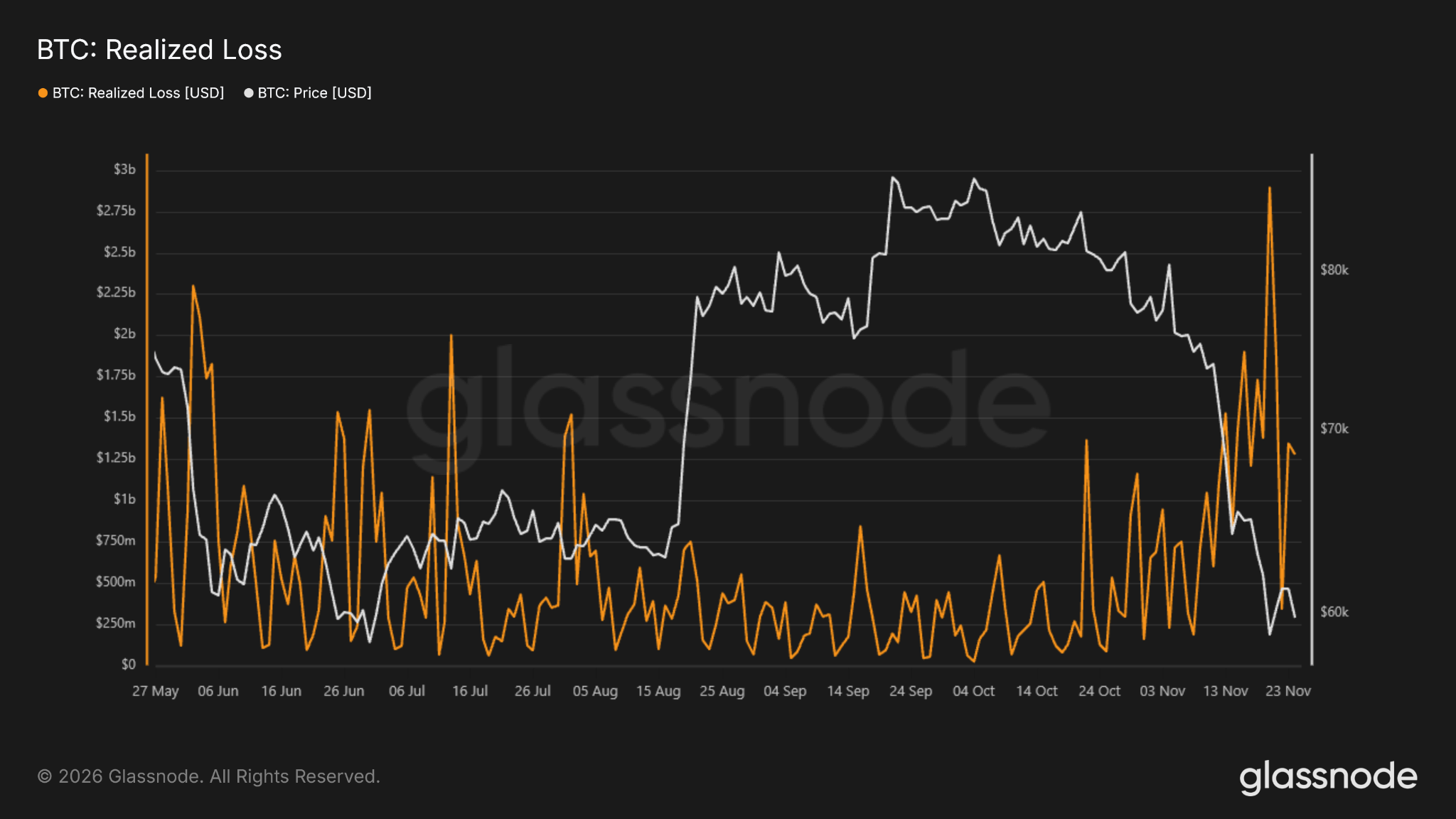
On November 20, Strategy’s market valuation stood at approximately 0.96 times the value of its Bitcoin holdings, a ratio known as mNAV. Its year-to-date Bitcoin yield was also negative: Bitcoin holdings per diluted share had fallen. With its shares trading at a discount to the value of its Bitcoin, issuing more stock to fund purchases was less attractive. Yahoo Finance data showed that Strategy shares had lost nearly 50% in a month.
MSCI was scheduled to remove Strategy and Metaplanet from its global benchmark on December 1. Funds tracking the index could sell shares as a result. For treasury companies, cash reserves and limited collateralized debt offered some protection against falling token prices. More heavily indebted companies faced greater pressure to sell holdings.
Bitcoin losses mount as ETF investors withdraw capital
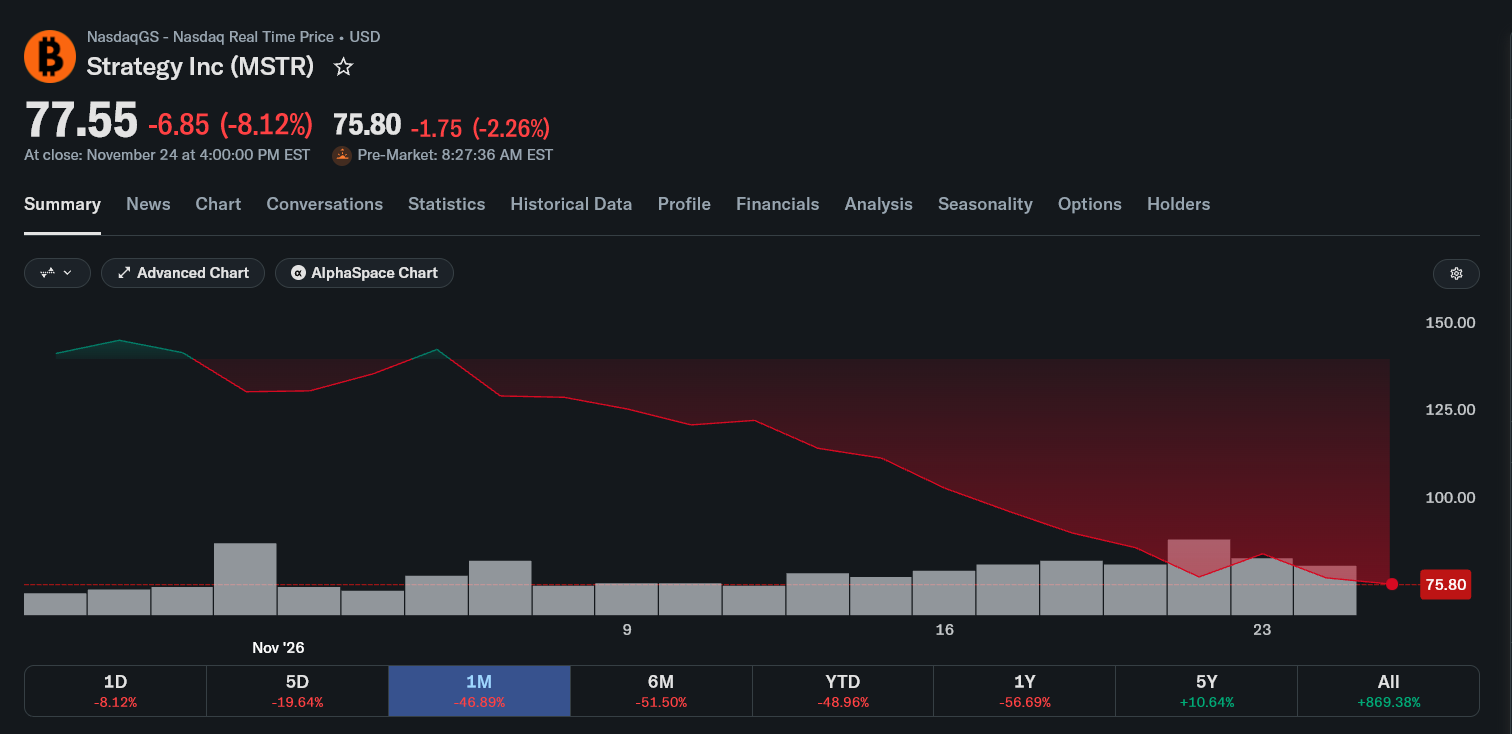
Glassnode data showed that realized Bitcoin losses had reached levels historically associated with market bottoms. Much of the speculative leverage had cleared, but that did not establish that buyers were returning. US spot Bitcoin ETFs recorded approximately $4.94 billion in net outflows from the start of November through November 24. Stablecoin supply contracted nearly 6% over the 30 days through November 23.
A short-term rally remained possible. Sustaining a recovery, however, would depend in part on stronger spot buying and renewed institutional inflows.

Financing pressure extends beyond crypto
The Nasdaq fell 10% in the week before the November 26 report, its worst weekly performance since March 2020. The Philadelphia Semiconductor Index fell 17.13%. Jensen Huang’s return as Nvidia CEO prompted a brief recovery on November 23, but semiconductor stocks fell nearly 8% on November 24, and Anthropic closed below its IPO price.
Investors were questioning whether AI revenue could justify infrastructure spending. Markets also anticipated a possible rate increase at the Federal Reserve’s December 9 decision. Higher financing costs could further weaken demand for speculative assets, including crypto; a rate increase was not yet a decided outcome.
Private crypto funding nevertheless rose 36% in the preceding week to $170.7 million, with one deal accounting for more than 60% of the total. Stablecoin infrastructure provider Codex raised $30 million. KuCoin Ventures analysts said private investors continued to look for evidence that companies could deliver on their business plans and generate revenue.