How could mining revenue be diverted without compromising Bitcoin itself? In an account published on November 16, 2026, Odaily reported that an unauthorized change through Luxor’s Commander fleet-management software redirected an estimated 64,000 Bitcoin miners, representing about 13 EH/s, to the OCEAN pool. Mining payouts were directed to an address identified by hosting provider CoreX Hosting as attacker-controlled.
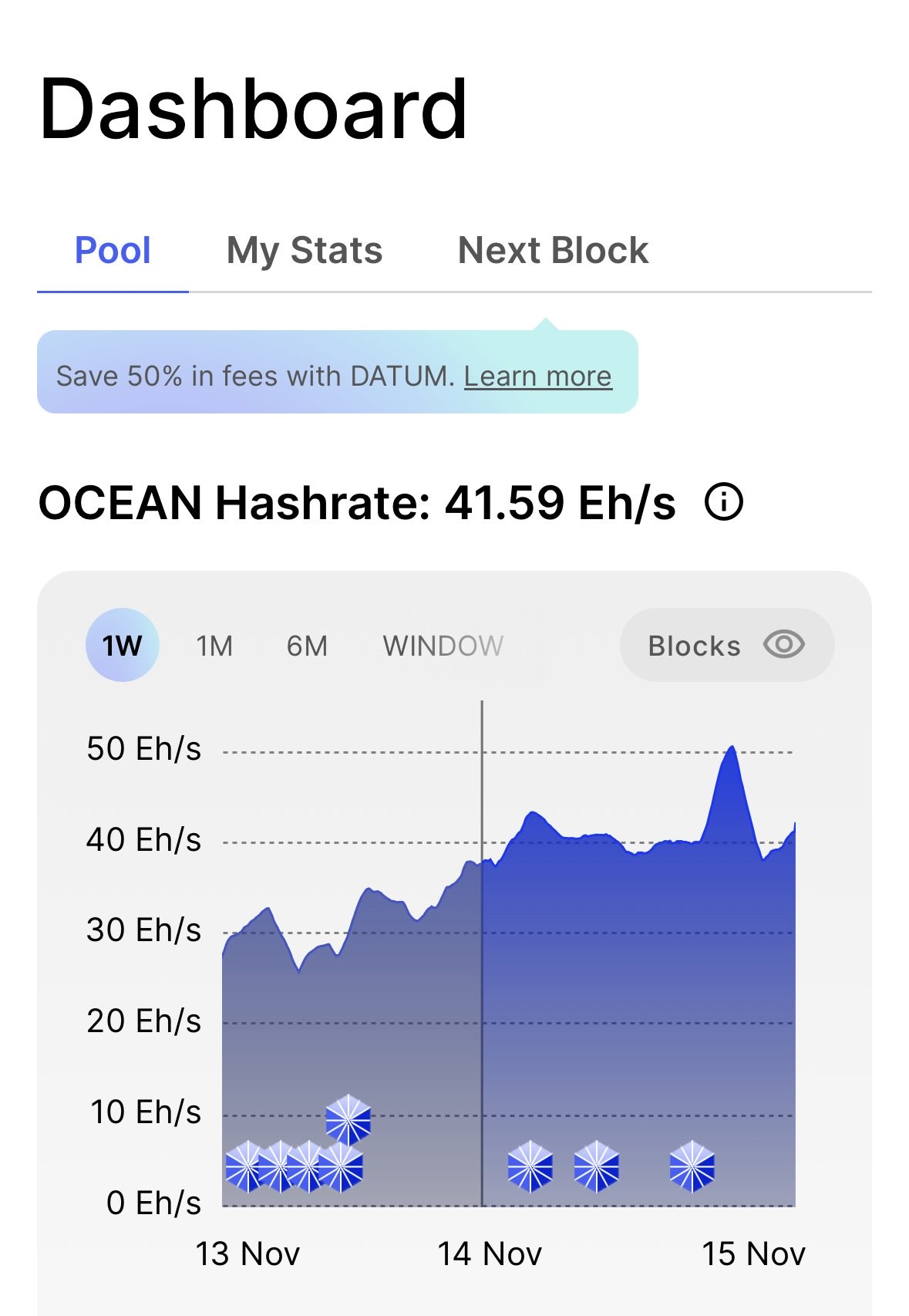
CoreX warned of the redirection on November 15. Bitcoin News reported that OCEAN’s pool hashrate briefly approached 50 EH/s before falling to around 40 EH/s. In a later update that day, at 2:40 p.m. Beijing time, CoreX said the redirected capacity had fallen from 13 EH/s to roughly 100 PH/s and that the attack appeared to be over.
Luxor said its monitoring detected the unauthorized redirection through Commander, affecting more than a dozen customers. It said Commander was patched within two hours and affected miners were being returned to their previous pool settings. Luxor also said it would compensate customers for their normal mining revenue, that no system data was leaked, and that its mining pool and LuxOS were unaffected.
Luxor CEO Nick Hansen described the incident as a “sophisticated, AI-assisted” attack. That characterization is Hansen’s; the account did not establish independently how AI was used. He said Luxor had paused most new-feature development to focus on security infrastructure.
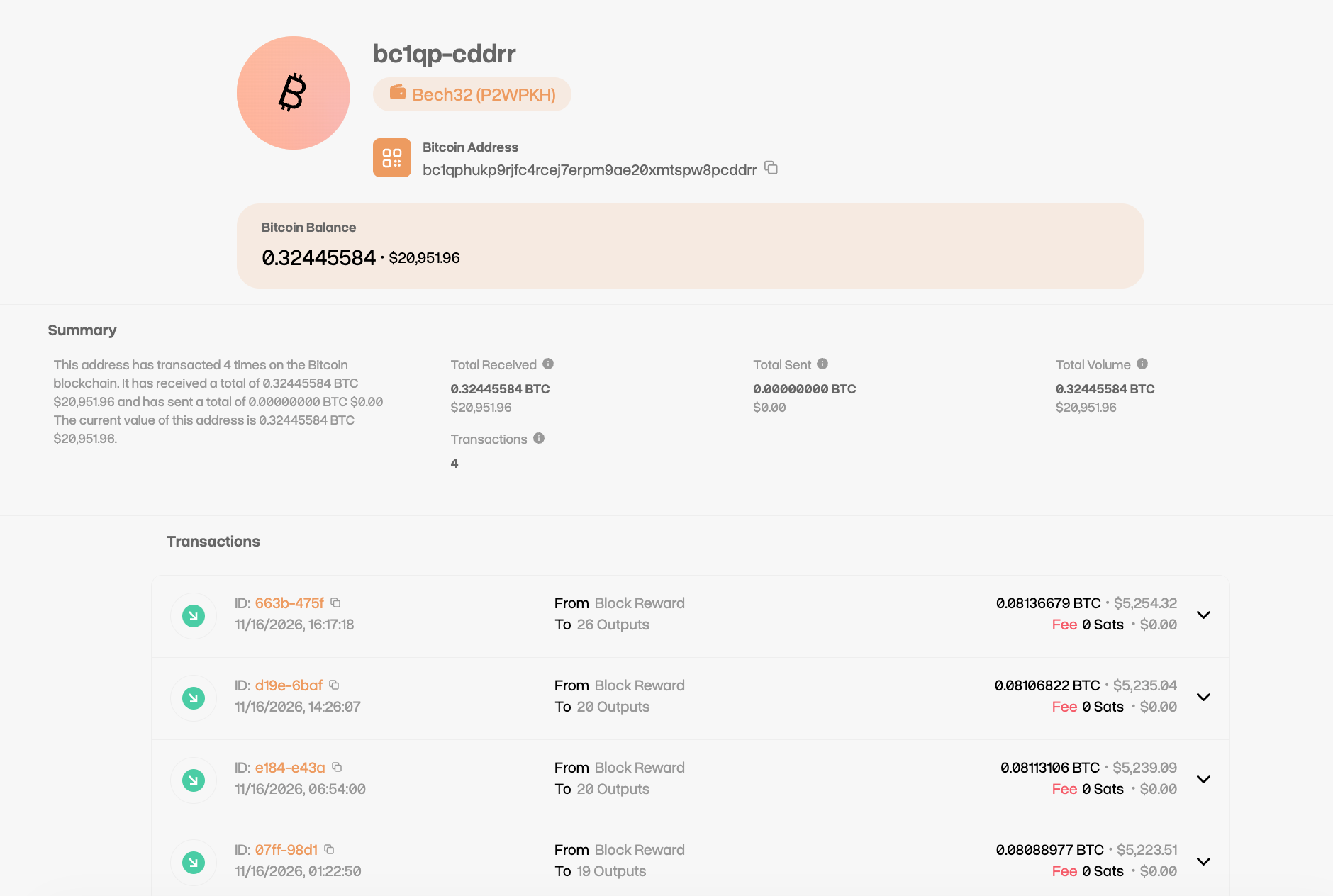
The payout figures remained unresolved at publication. The account said the attacker obtained 0.162 BTC, but also cited on-chain data showing four payments totaling 0.3244 BTC to the address CoreX had flagged. Those payments were recorded at different times on November 16, raising a question about the relationship between the address activity and Luxor’s stated patch timeline. A detailed incident report had not yet resolved the discrepancy.
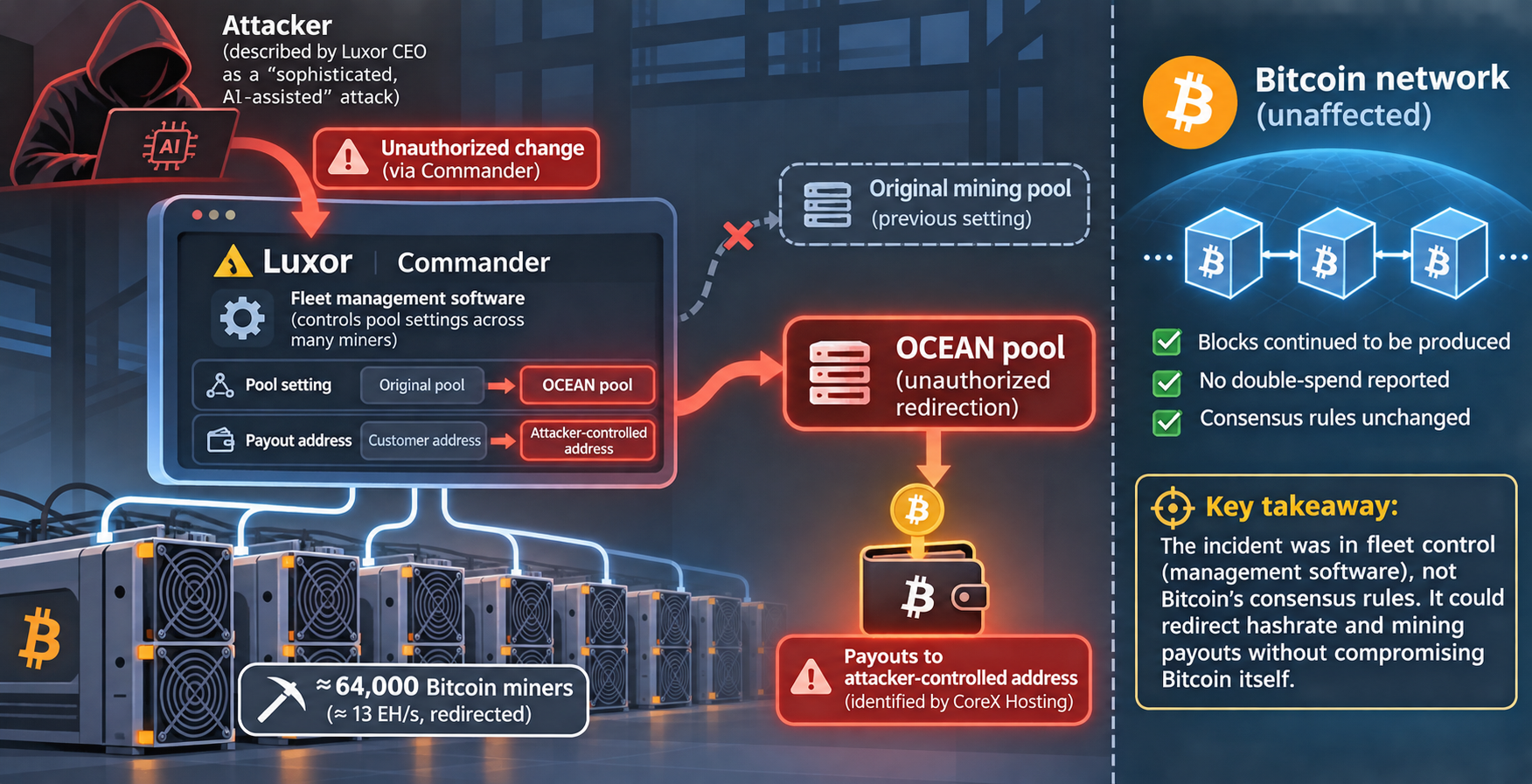
The reported failure was in fleet control, not Bitcoin’s consensus rules: blocks continued to be produced, and the account reported no double-spend. Management software can change pool settings across large numbers of machines, so unauthorized access to that control path can redirect both hashrate and the associated payouts.
The financial exposure was still an estimate, not a confirmed loss or compensation total. Using 13 EH/s, a Bitcoin price of about $65,000 and the mining difficulty at the time, the account estimated roughly $17,000 in mining revenue per hour, or $410,000 per day. On an assumed interruption of two to 20 hours, it put possible compensation at approximately $34,000–$340,000. The actual affected duration, diverted hashrate and payment amount remained to be established.