What changed in Bitcoin’s market structure after its pullback from September’s high? In an analysis published on November 5, 2026, Glassnode reported that fewer recent buyers were sitting on unrealized gains and that much of the futures leverage built up since August had been cleared. The report concerns trading conditions, not mining costs or network hashrate.
Recent buyers lose their profit cushion
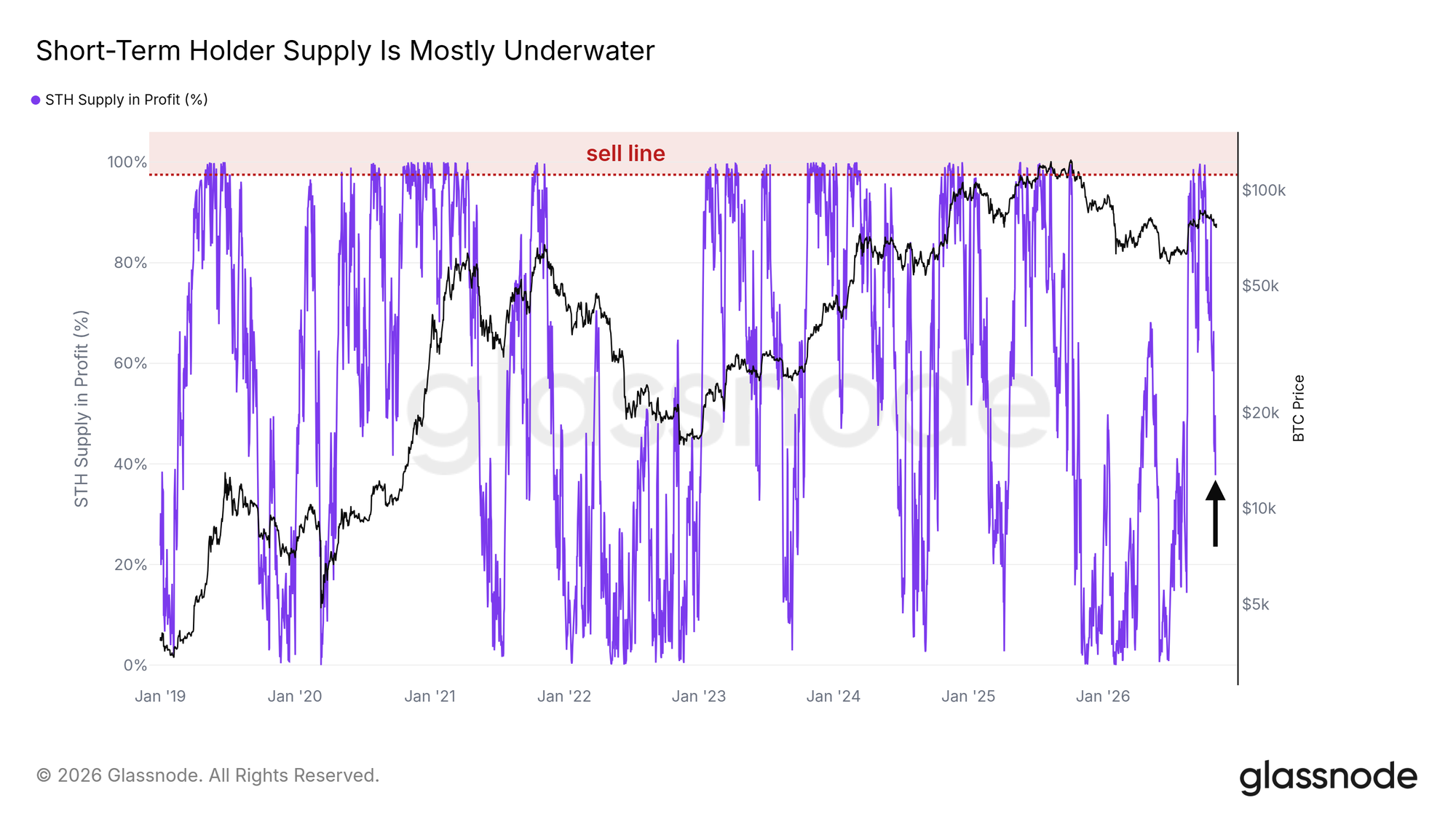
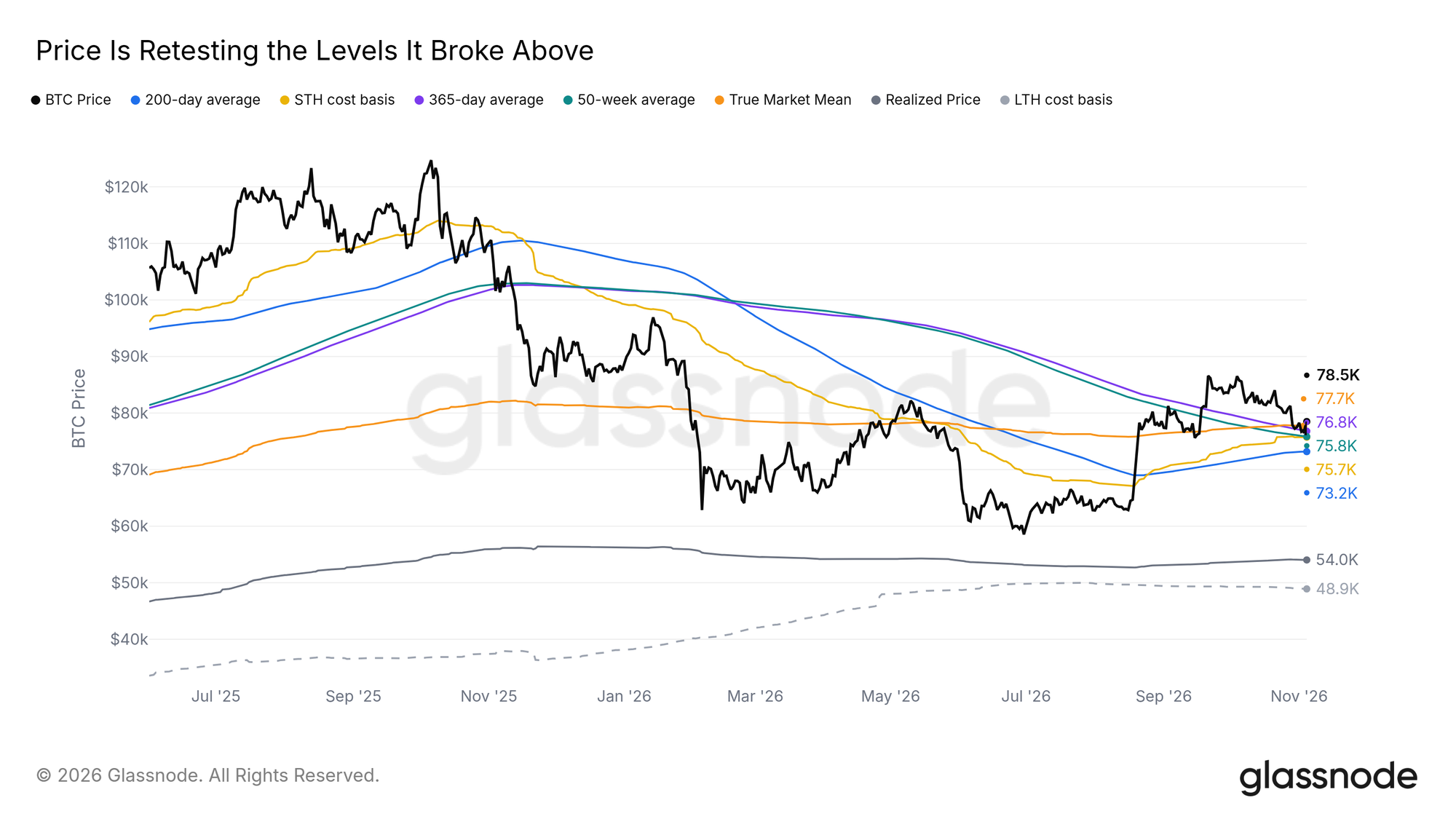
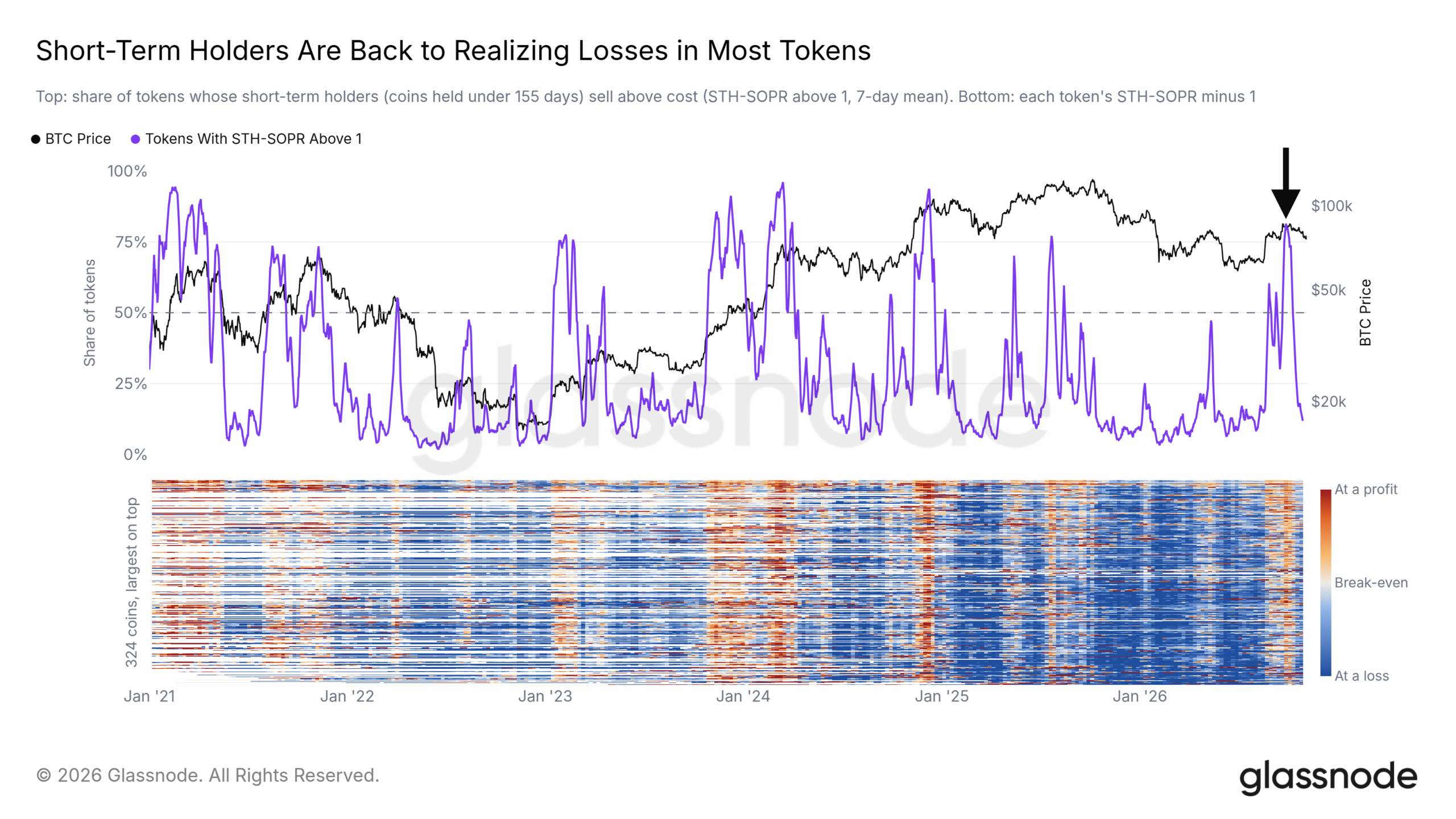
Glassnode said the share of short-term holder supply in unrealized profit fell from above 97.5% in early October to about 38%, following a roughly 10% price decline from September’s high. The firm described the change as a reduction in speculative excess. It identified the True Market Mean at approximately $77,700 and the short-term holder cost basis near $75,700. Bitcoin briefly closed below the former on November 3 and touched $76,100 overnight before moving back above it, according to the report.
Futures and options position for different outcomes
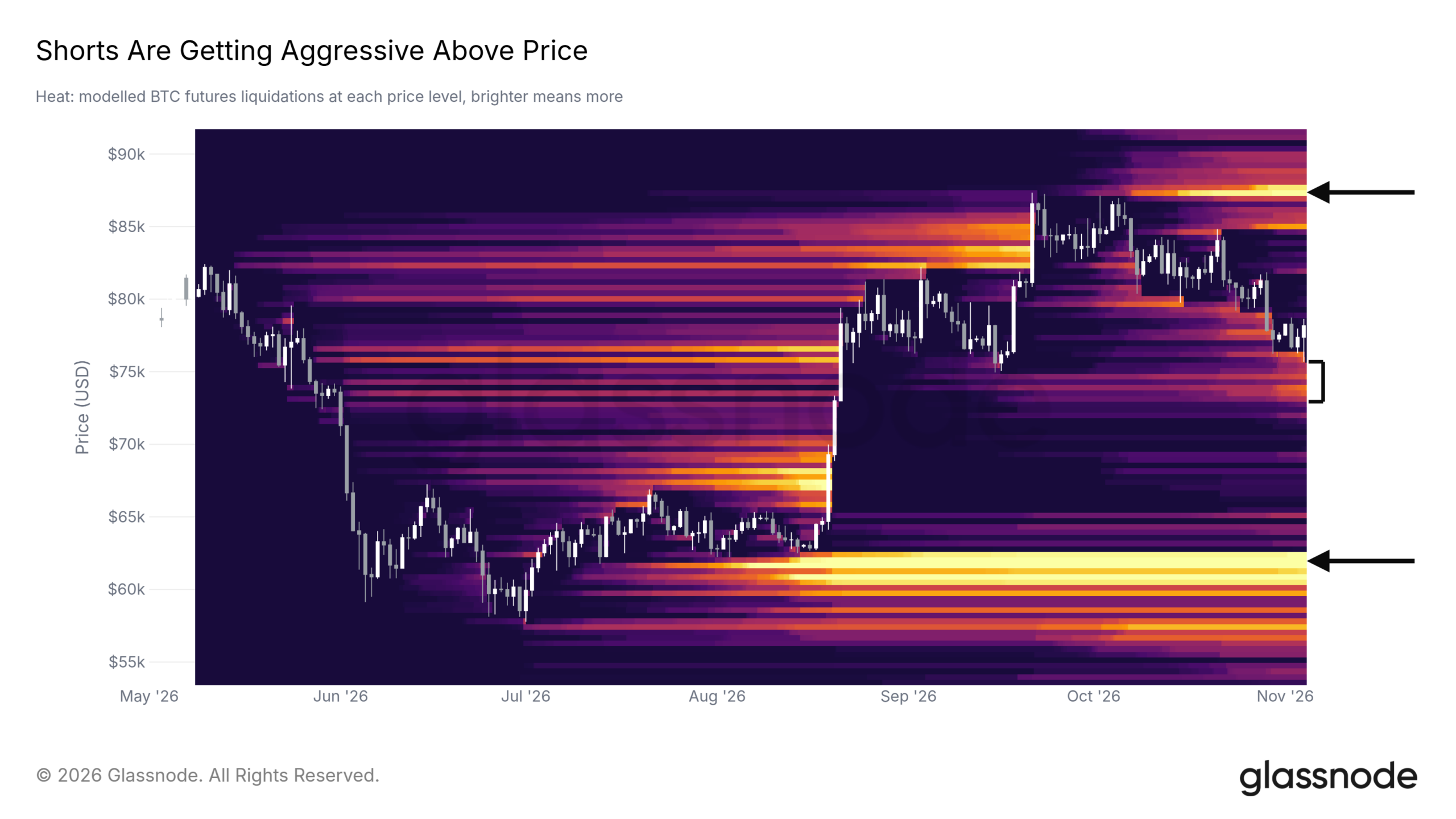
Glassnode’s liquidation model showed remaining long-liquidation exposure concentrated around $73,000–$76,000, with another cluster at $60,000–$63,000. It placed the largest overhead short-liquidation cluster near $87,000. These are modeled exposures, not guaranteed price targets or support levels.
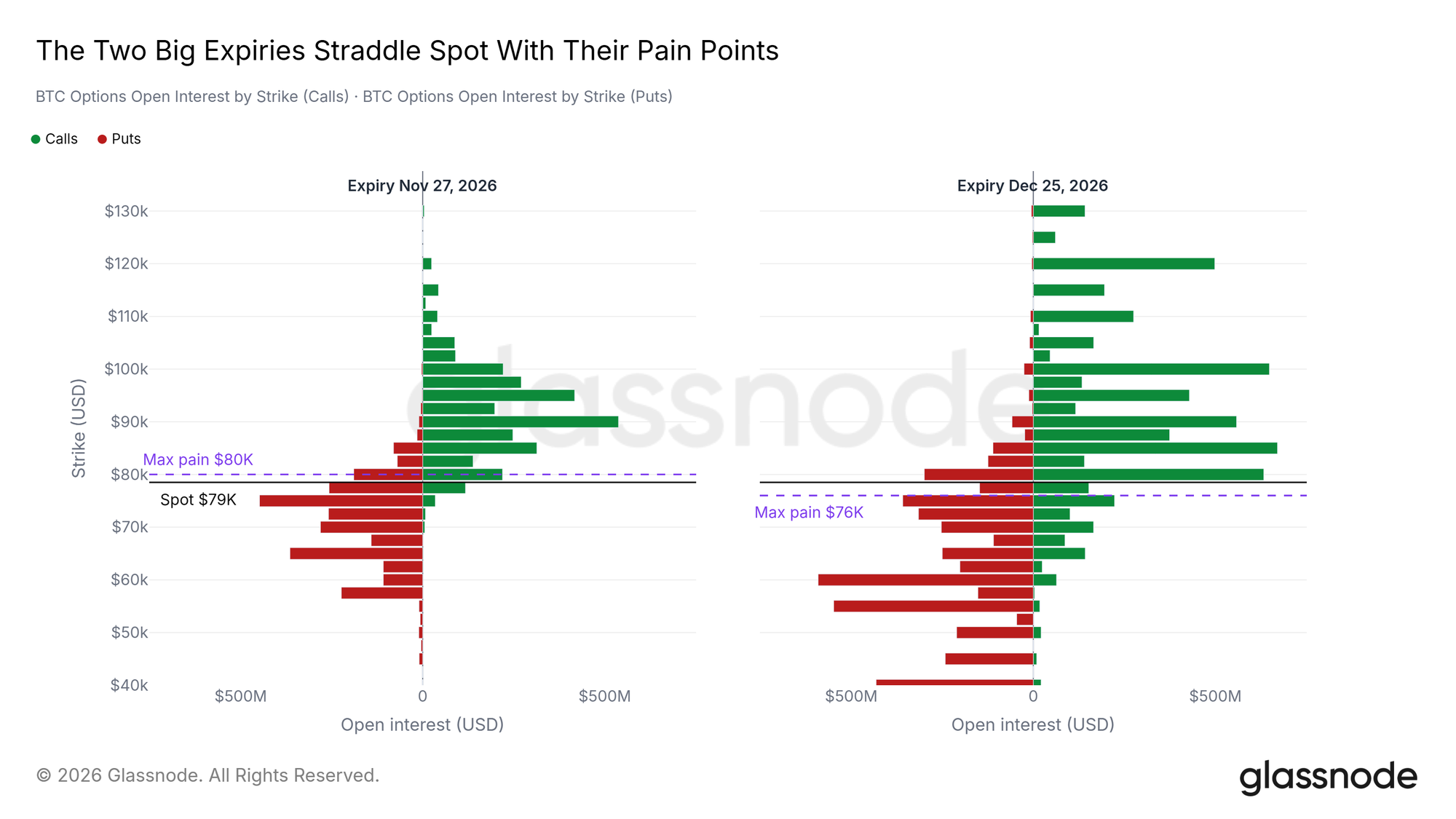
Across options expiries, the report put call open interest at about $18 billion versus $13 billion in puts. It identified November 27 and December 25 expiries with approximately $5.7 billion and $12.5 billion in open interest, respectively. Its largest December call positions were at strikes of $80,000, $90,000, $100,000 and $120,000; positioning does not establish where Bitcoin will trade at expiry.
Spot activity holds up, but ETF flows weaken
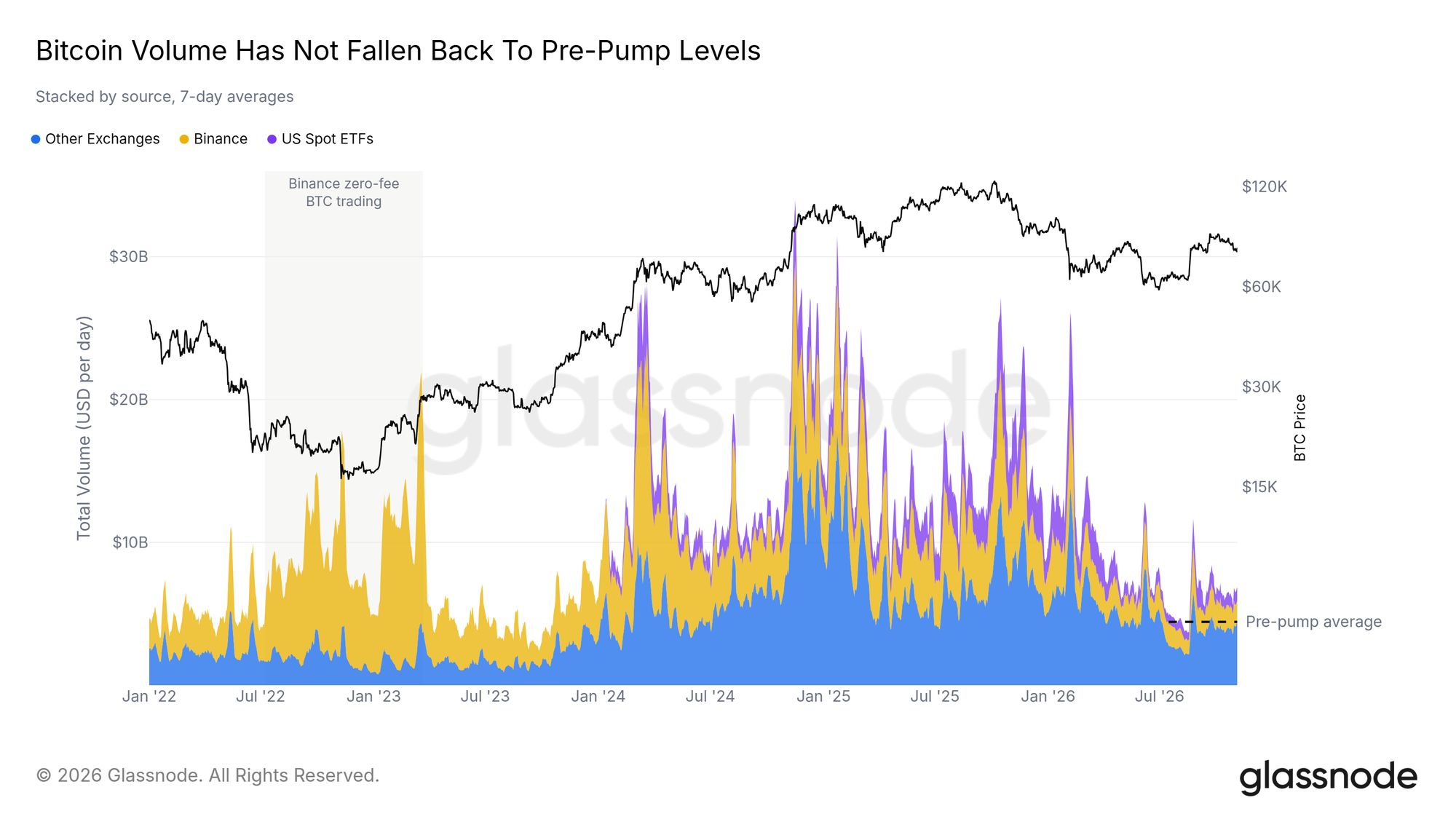
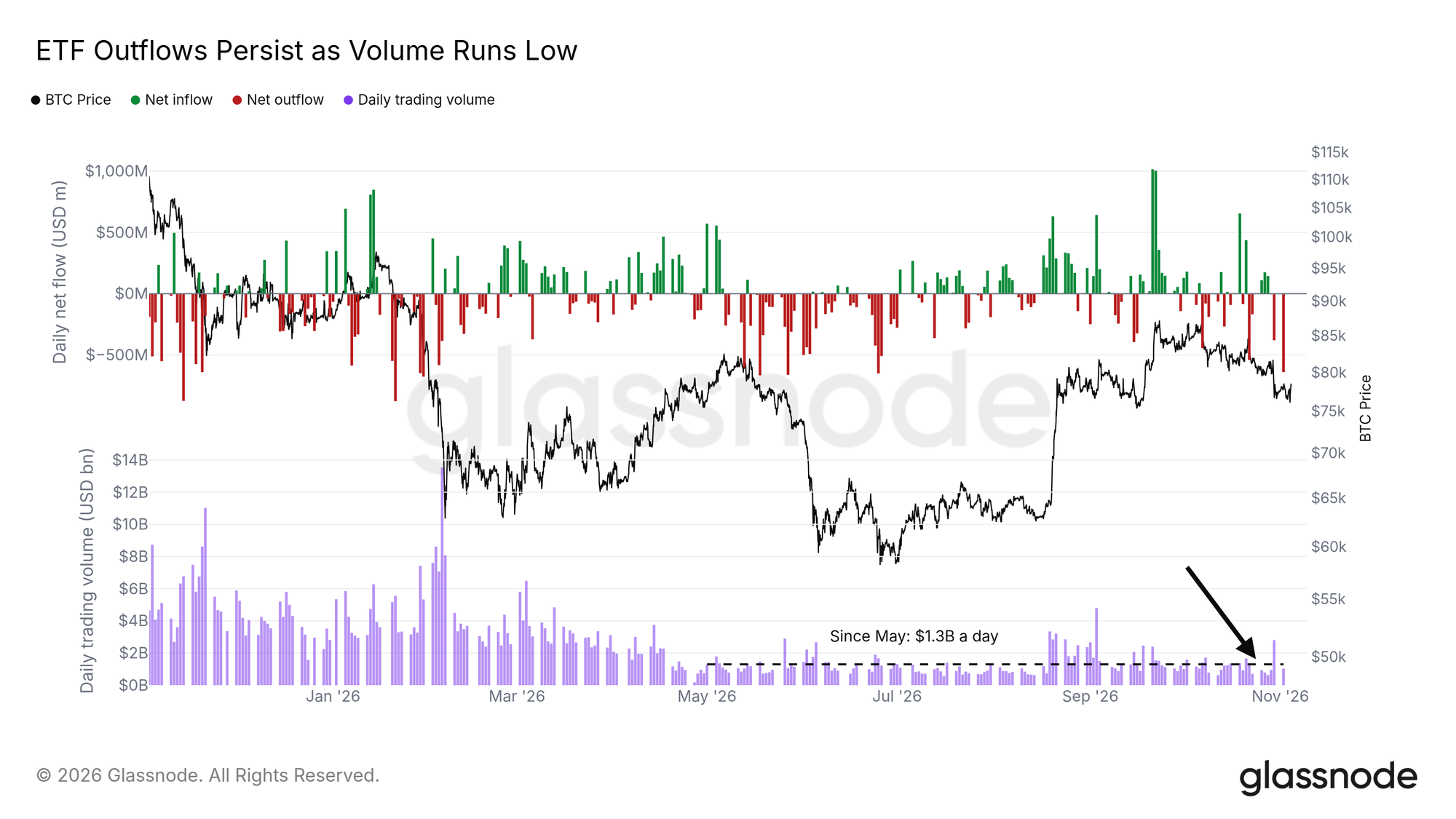
Glassnode estimated average daily spot volume over the preceding two weeks at about $24 billion—roughly 50% above its pre-August-breakout baseline. Over the same two reporting weeks, it said US spot Bitcoin ETFs recorded nearly $1 billion in net outflows, averaging about $115 million per day. The report interpreted that contrast as evidence that existing crypto-market capital, rather than new ETF inflows, was driving much of the trading activity.

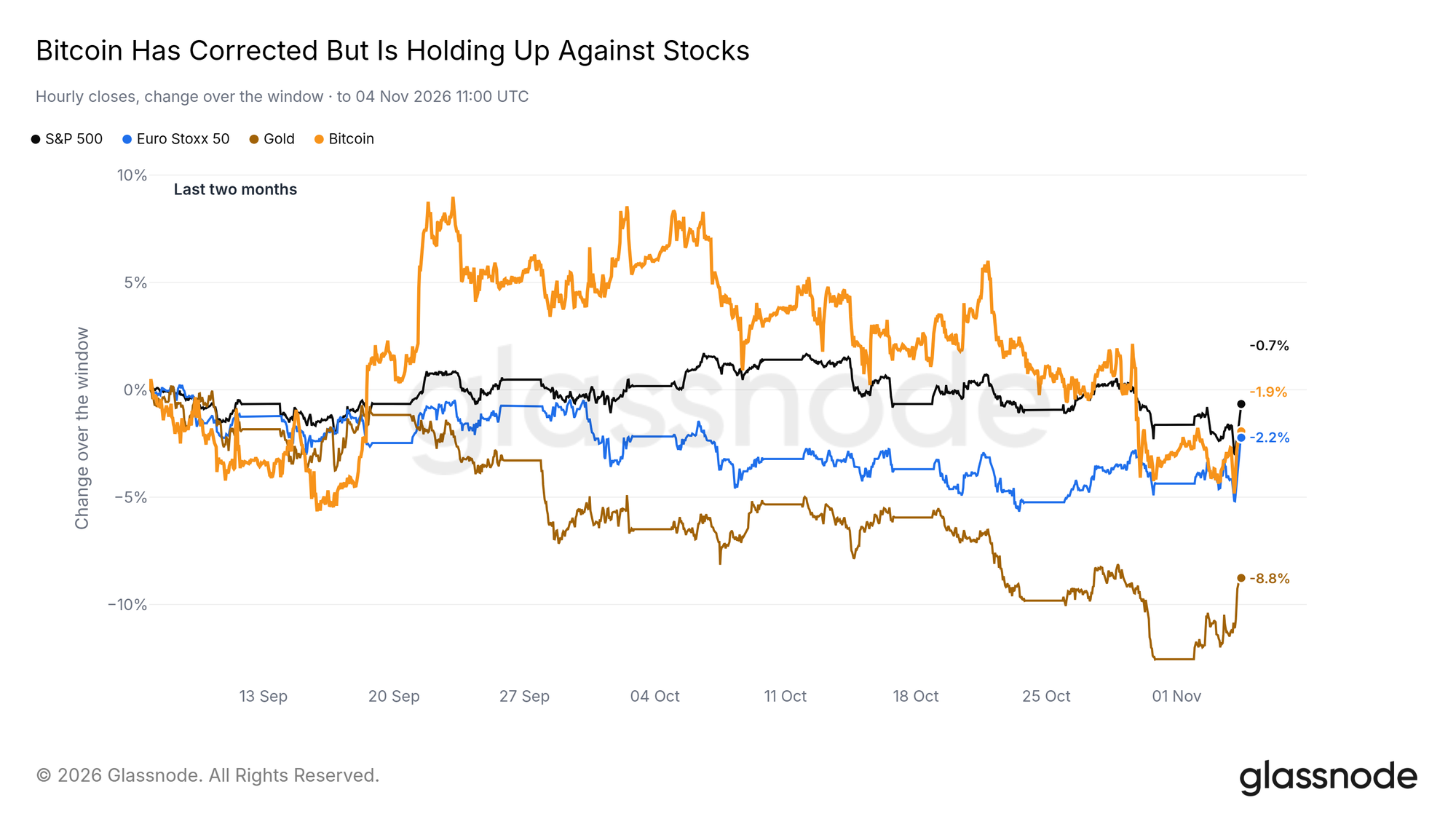
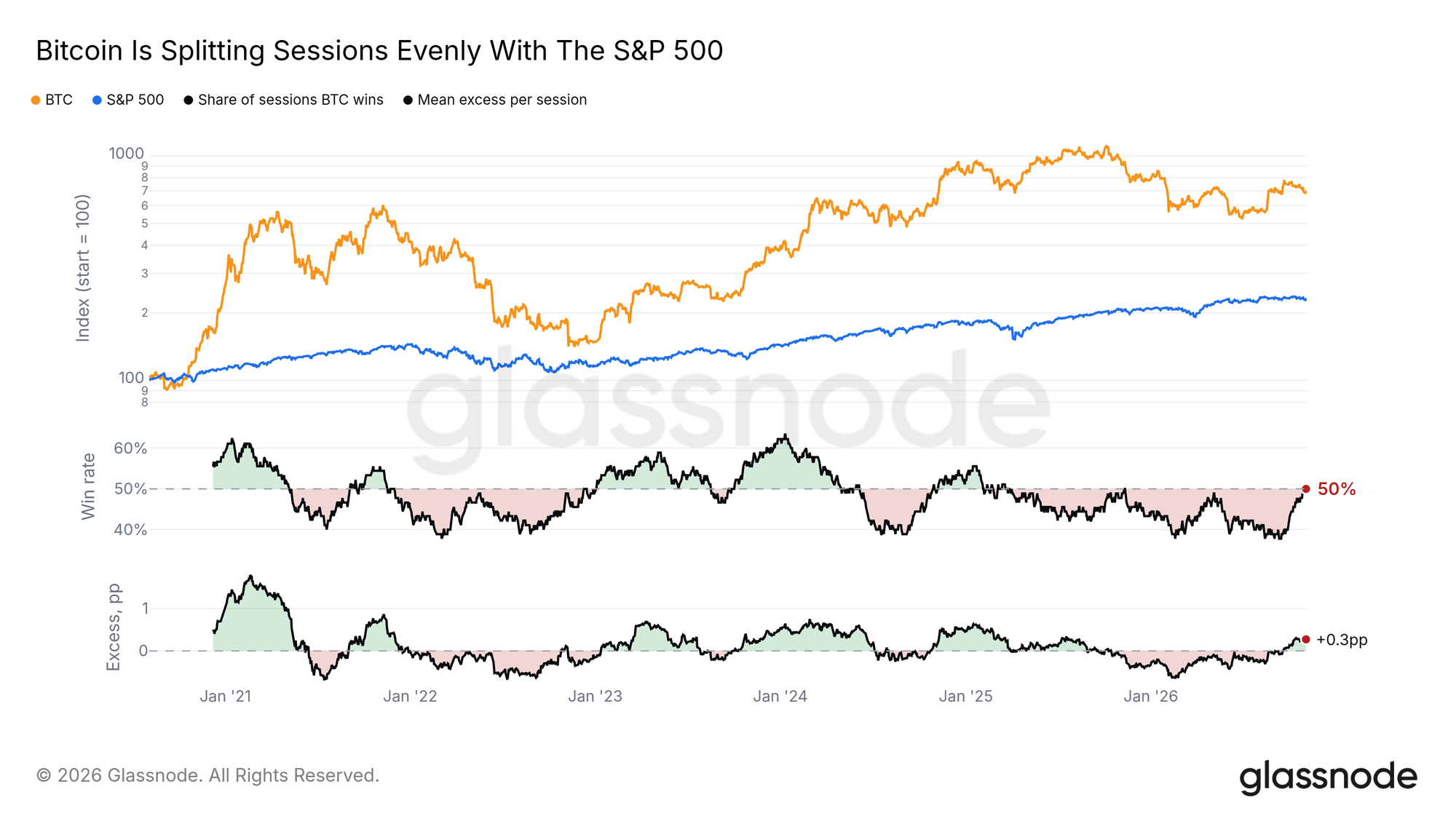
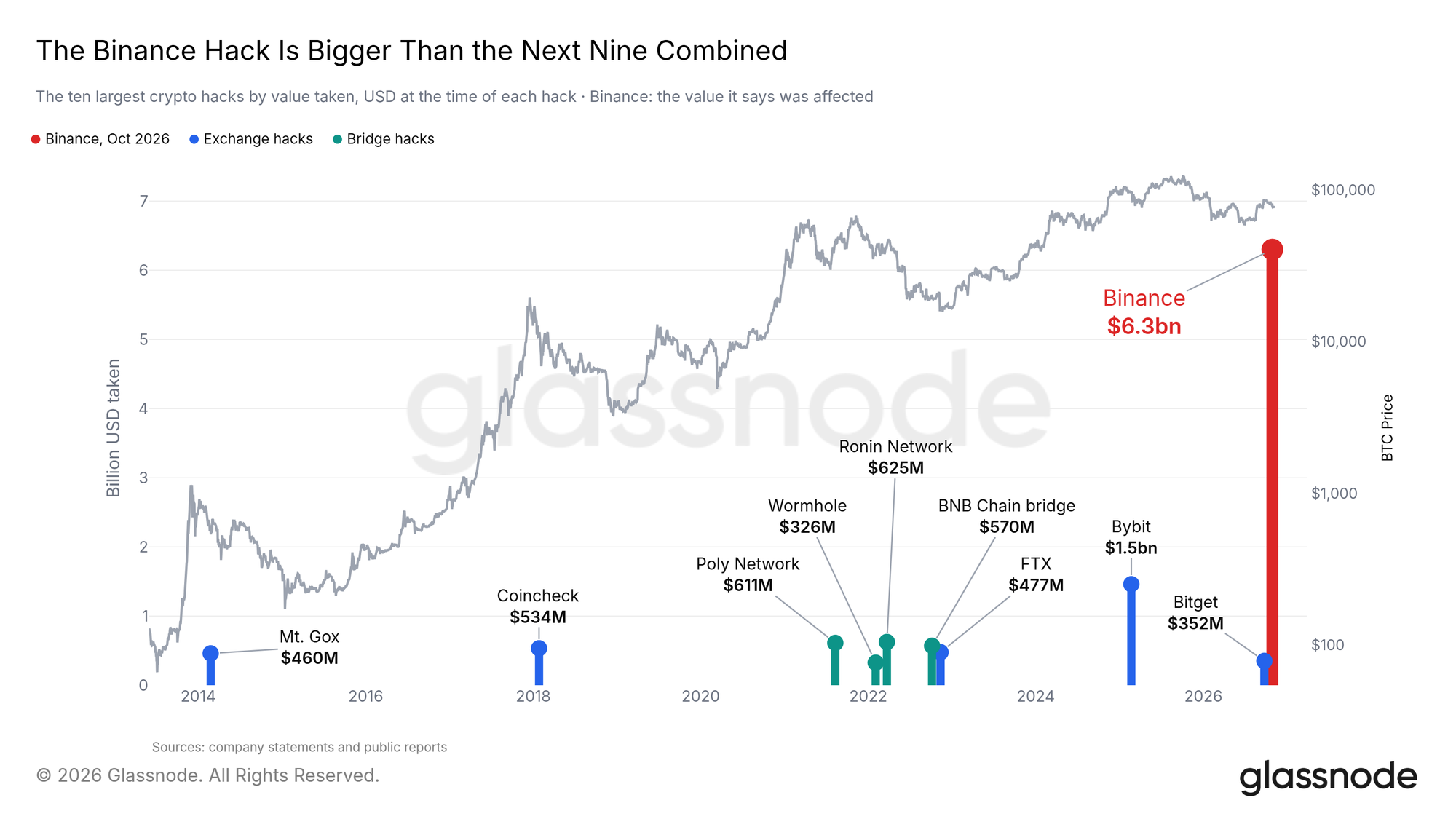
For broader context, Glassnode said Bitcoin fell about 2% over the preceding two months and outperformed the S&P 500 on half of the previous 90 trading days. It also reported that Bitcoin fell roughly 3% in the days following a reported October 29 Binance hot-wallet attack involving approximately $6.3 billion, citing Binance’s disclosure for the amount. The scale and circumstances of that incident are presented here as claims in the report, not independently verified findings.


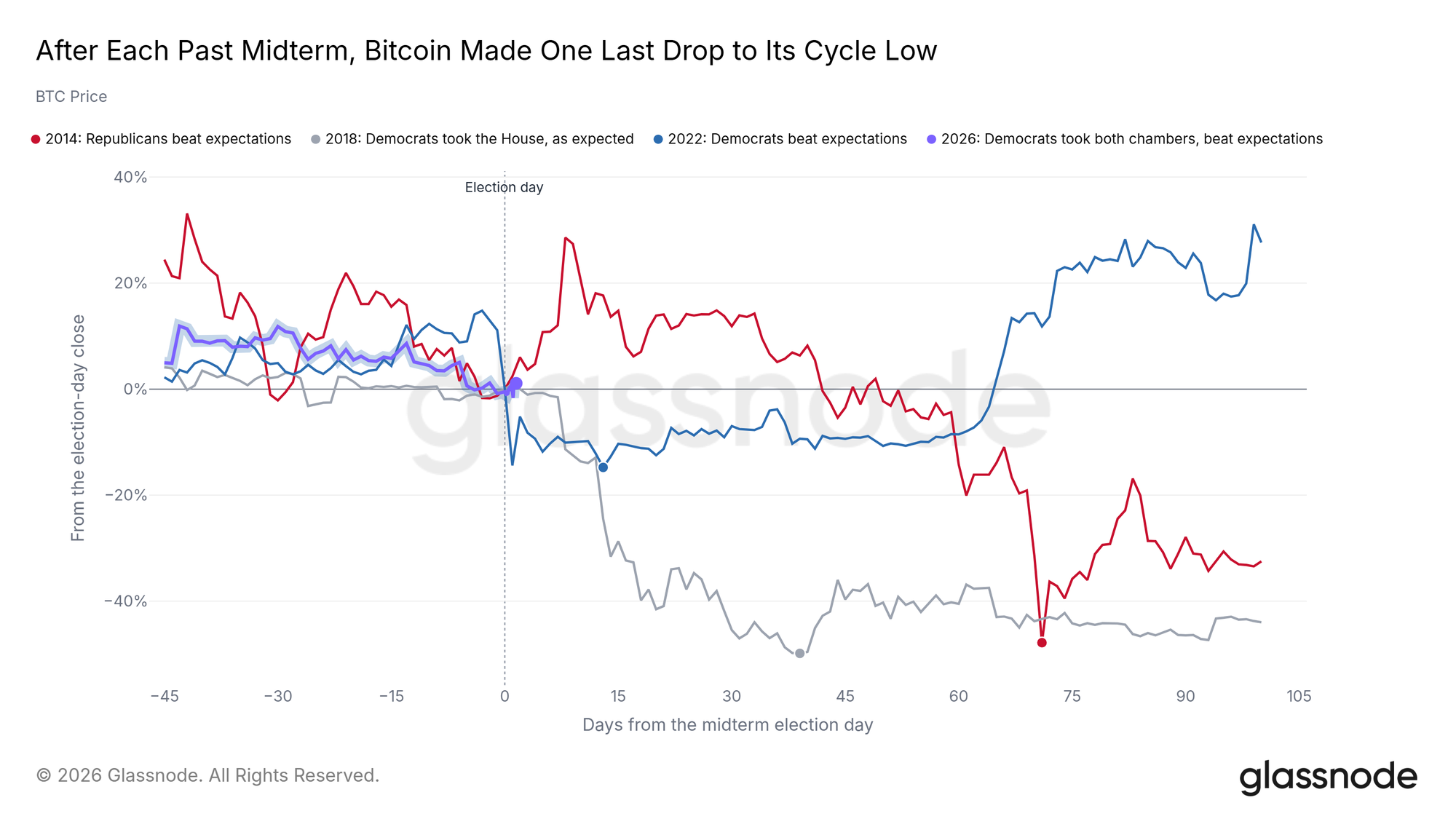
The report further stated that Democrats won control of both chambers of Congress in the November 3 US midterm election and compared Bitcoin’s subsequent modest rebound with previous election cycles. Those historical comparisons cannot establish what happens next. For readers assessing the market at the time of publication, the observable distinction was between sustained spot trading and ETF net outflows—not evidence of a change in mining economics.