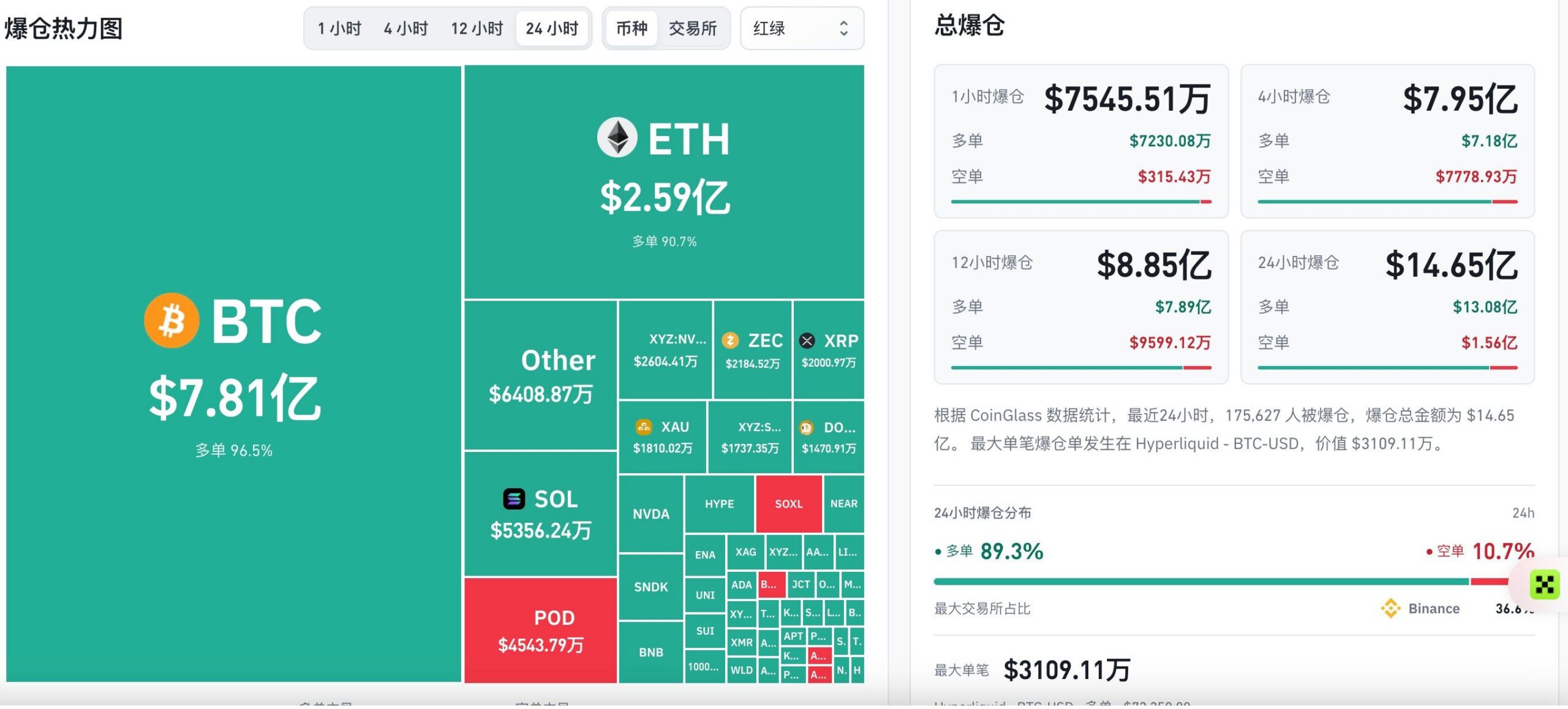
What was putting pressure on Bitcoin—and what would have to change for it to recover? A report published at 13:13 Beijing time on November 13, 2026, said Bitcoin had fallen below $70,000, touched $68,307 and lost 7% over 24 hours. It also cited a later price of $71,393. Those are separate snapshots, not a single closing price.
The report attributed the sharp selloff partly to a reported Nvidia leadership announcement, saying Nvidia shares opened 14% lower and Bitcoin fell below $73,000 soon afterward. That proposed link is the report’s interpretation, not proof that one event caused the Bitcoin decline.
Fund flows and available capital
The report put US spot Bitcoin ETF net outflows at $299.9 million on November 11, including $269.73 million from IBIT. It said the category had lost $1.44 billion over five trading days. If accurate, those figures point to weaker demand through a major institutional channel; they do not measure sales by Bitcoin miners.
It also reported a $14.2 billion decline in stablecoin supply over 30 days. The article treated that as evidence of capital leaving crypto, while also attributing part of the decline to frozen tokens following an alleged Binance theft. A supply contraction alone cannot establish where all of that capital went.
Levels in the report’s outlook
The article described $70,000 as a key downside level. Its base case was a $70,000–$75,600 range; it presented a recovery through roughly $76,230–$78,905 as a condition for a possible move toward $82,700. These were scenarios, not observed outcomes. The report said an upside move would require ETF flows to turn positive, stablecoin supply to stop shrinking and the 10-year US Treasury yield to fall below 5%.
For mining businesses, the relevant distinction is between a reported change in Bitcoin’s market price and an operating-cost calculation. The report supplies no miner-specific electricity prices, hardware costs or production figures from which to calculate profitability.