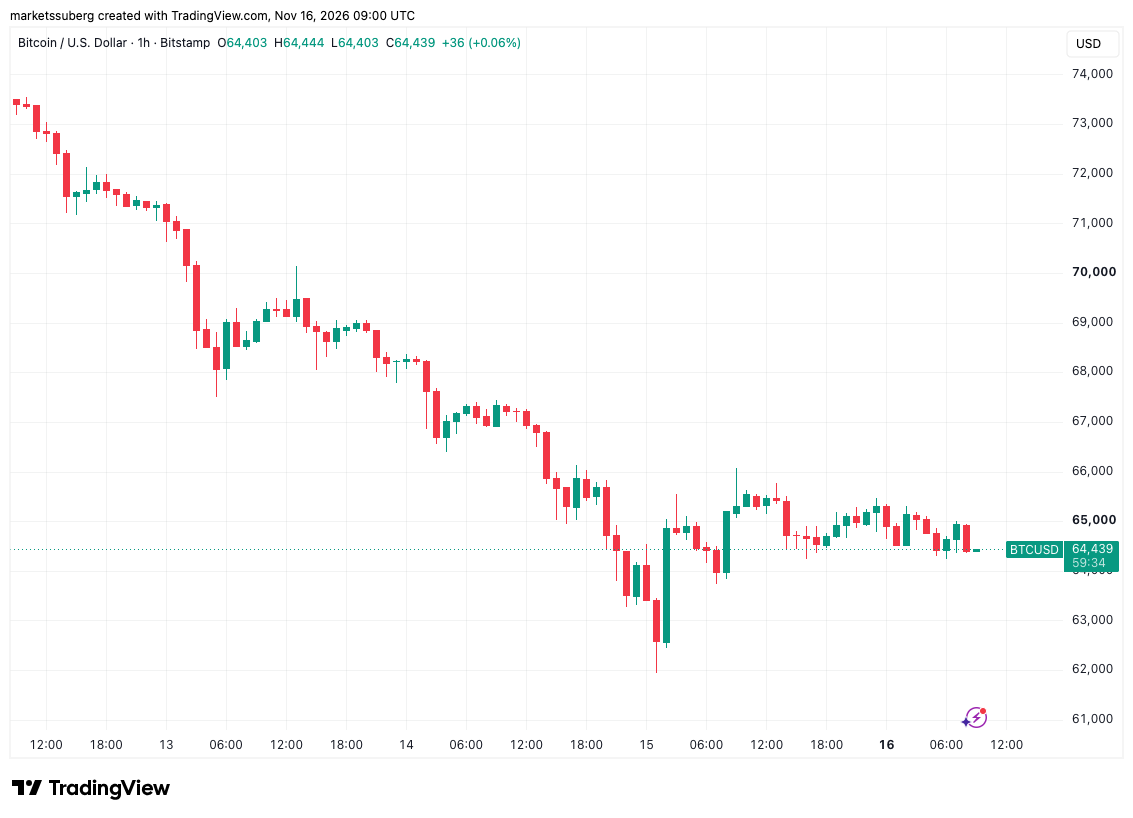
As reported on November 16, 2026, the immediate question for Bitcoin traders was whether the weekend decline had ended. BTC fell to $61,950 on Bitstamp in thin trading—a level last seen on July 13—then briefly recovered to $66,000 before trading around $64,500 during Monday’s Asian session.
Price and derivatives
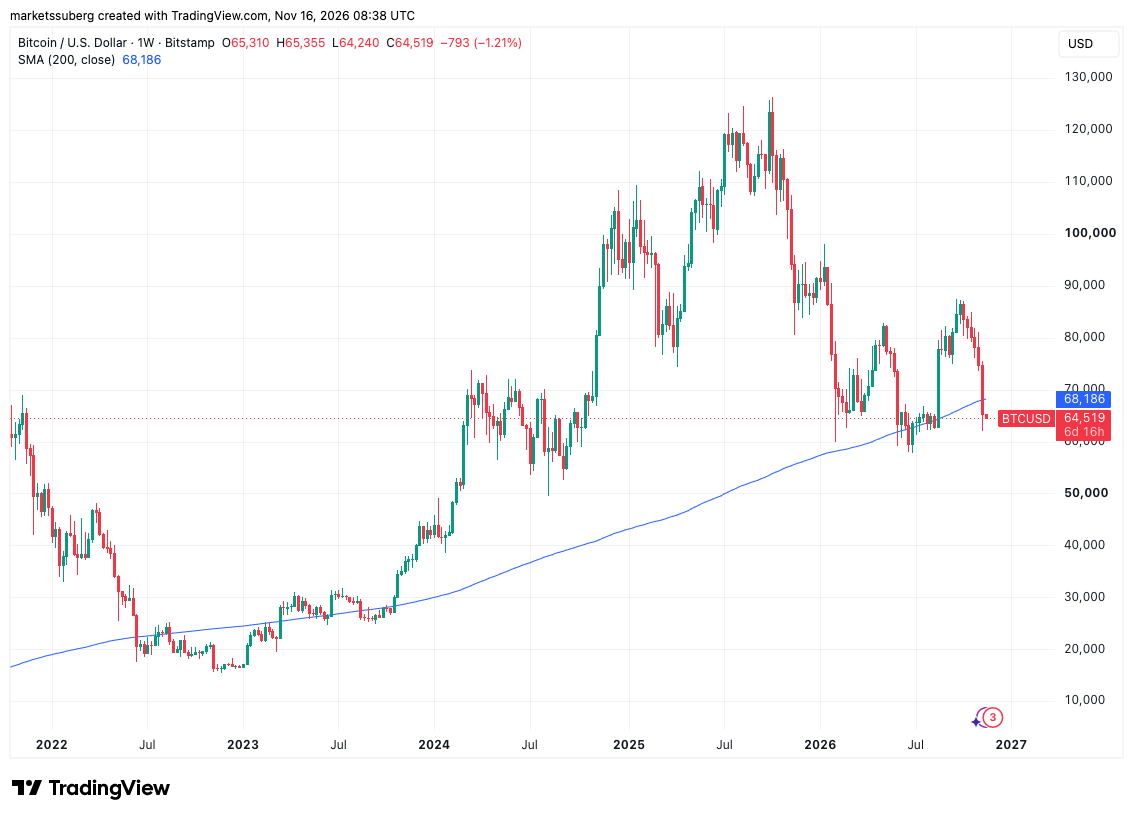
The decline put Bitcoin below its 200-week simple moving average, then at $68,186. Trader and analyst Rekt Capital said on Saturday that moves below that average have historically been part of bear-market bottom formation. That historical comparison did not establish that a bottom was in place.
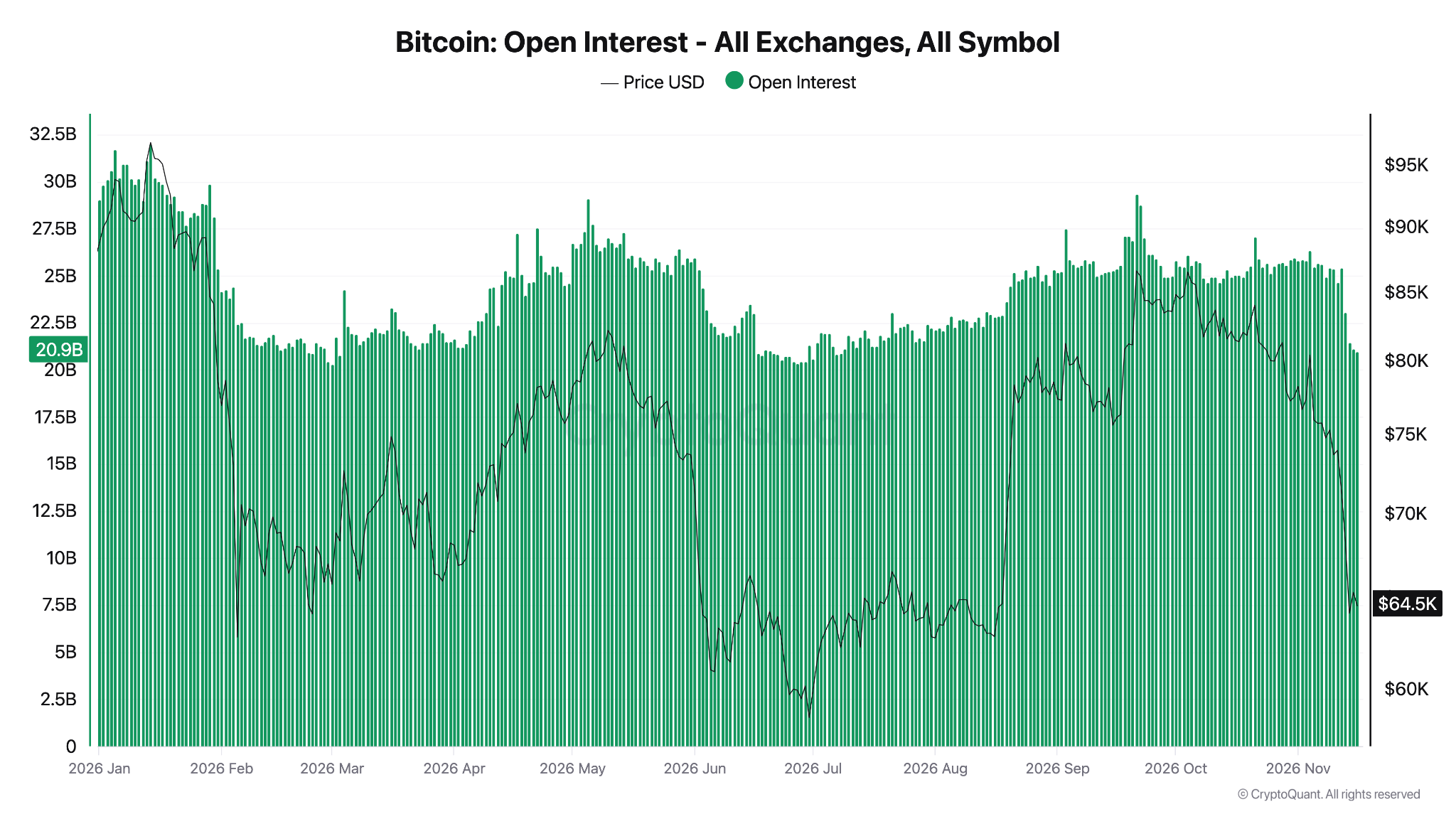
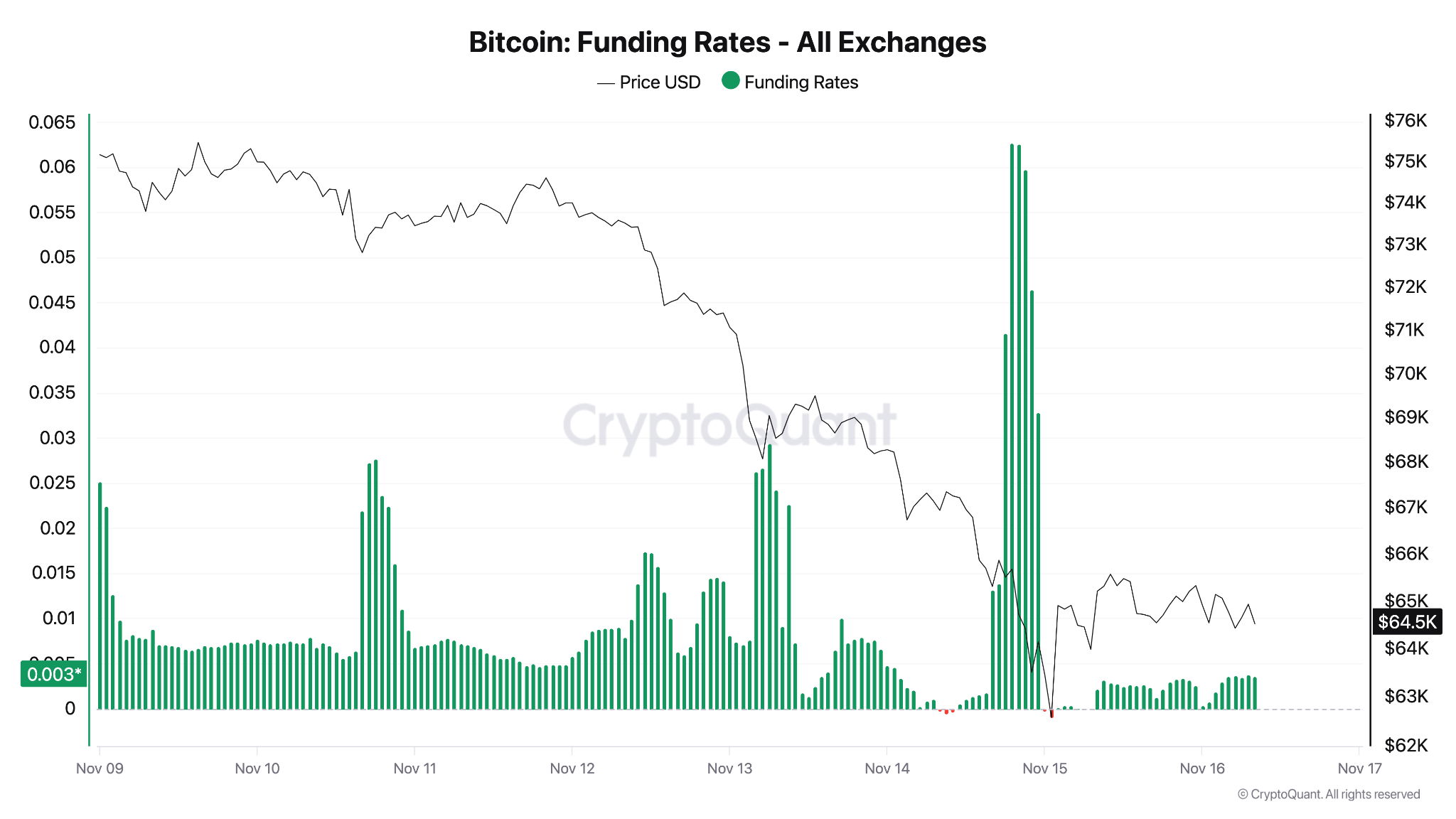
According to CryptoQuant, Bitcoin open interest fell about 9.1% from Friday to 10 am UTC Monday, reaching $20.98 billion. Perpetual-futures funding rates briefly turned negative near the weekend low, meaning short-position holders paid long-position holders. A CryptoQuant contributing analyst said a bottoming zone might be near if the sell-off had run its course, but identified the $59,000–$60,000 summer low as the next test.
Nvidia and the rate outlook
Nvidia’s third-quarter results were due after Tuesday’s US market close. The company had forecast roughly $108 billion in quarterly revenue, while analysts expected earnings per share to nearly double from a year earlier. Its shares closed the preceding Friday at $162.85, down 12.7% for the week, after touching $148.80 on Thursday.
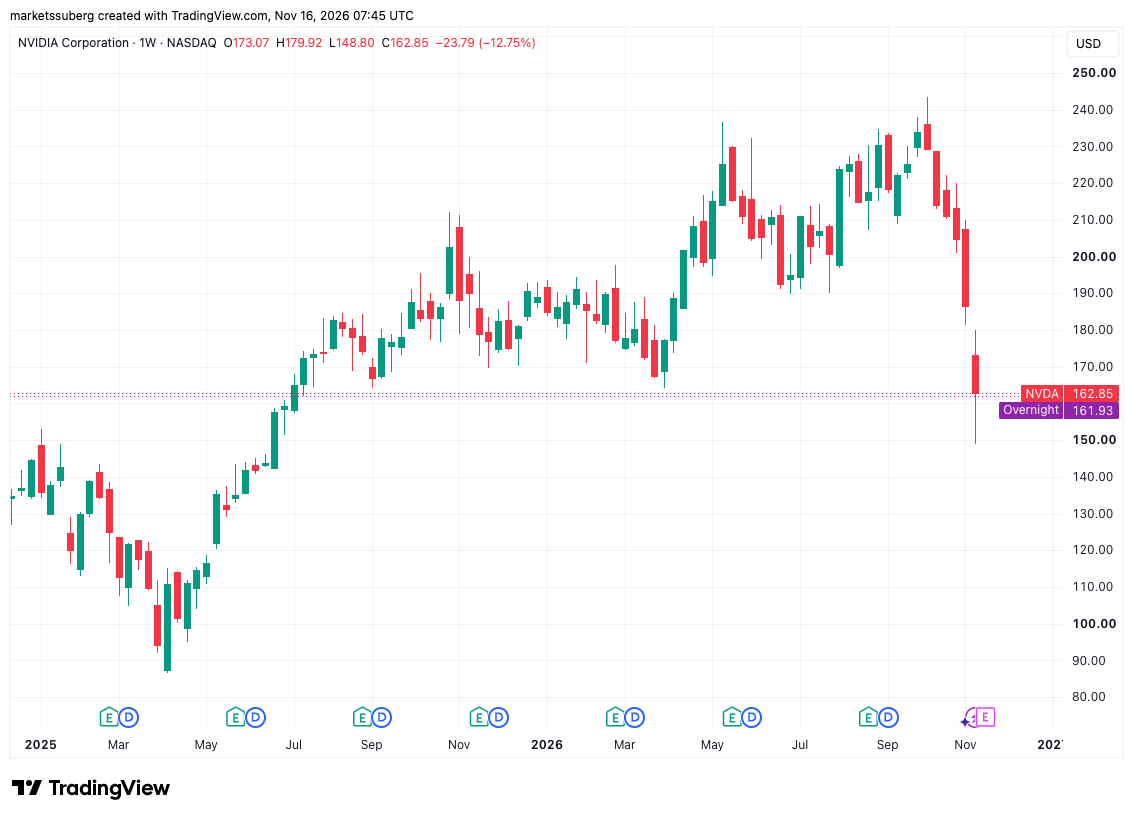
The earnings call was set to be led by interim CEO Colette Kress following Jensen Huang’s resignation the previous week. His departure followed reports of an affair with a chip executive whom US authorities suspected of spying for China; Beijing denied the espionage allegation. The Financial Times reported lobbying for Huang’s return, while US Treasury Secretary Scott Bessent argued that Nvidia should choose an outside successor. The article reported that Nvidia headlines had unsettled technology stocks and crypto markets, making its outlook another item for Bitcoin traders to watch—not a stated change in mining operations.
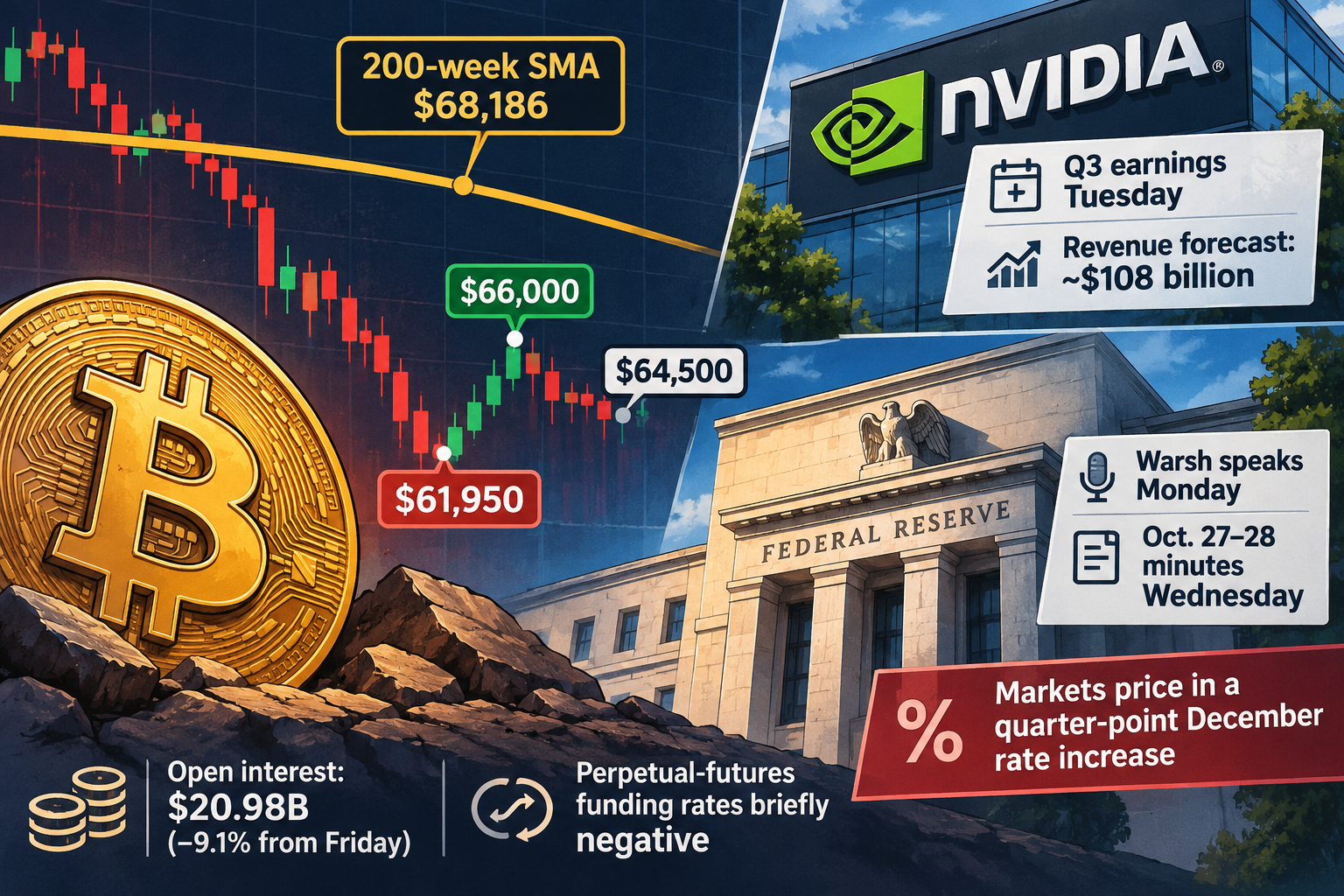
Federal Reserve Chair Kevin Warsh was scheduled to speak Monday, with minutes from the Fed’s October 27–28 meeting due Wednesday. Officials had held rates at 3.75%–4%. Following inflation data, markets had fully priced in a quarter-point December rate increase, according to the original report. These were market expectations, not an announced Fed decision.