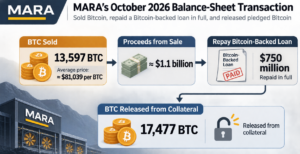
As reported on November 17, 2026, the operational question for Bitcoin market participants was whether a sharp reduction in derivatives exposure had absorbed the selling pressure—or whether continued spot ETF outflows would keep weighing on price. Glassnode’s week 47 market report showed leverage cooling, while recent buyers faced mounting unrealized losses. The report did not provide mining-cost or hashrate data.
Bitcoin was trading around $64,000 on Monday, November 16, after falling about 13% over the preceding week. The decline began on Thursday and accelerated over the weekend; price briefly fell below $63,000 on Saturday, its lowest level since late August.
Derivatives exposure fell, but ETF outflows continued
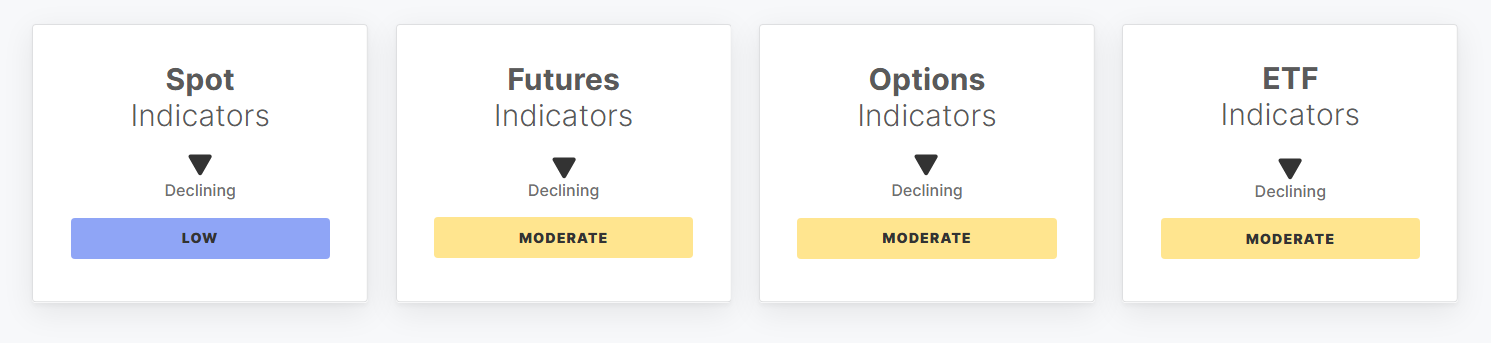
Glassnode reported that futures open interest fell 7.2% week over week to $34.2 billion, near the bottom of its observed range. Perpetual-futures funding rates also retreated from an elevated range to a neutral one. Perpetual cumulative volume delta, a measure of aggressive buying versus selling, moved from −$493 million to −$1.4 billion. Glassnode interpreted the derivatives data as evidence that leveraged long positions had been forced out or closed.
Spot-market measures also weakened. Glassnode’s price-momentum reading dropped 36.1%, from 35.6 to 22.8, its weakest reading since August. Spot cumulative volume delta deteriorated from −$51.5 million to −$133.7 million; aggressive selling was strongest from Thursday through Saturday and eased on Sunday. In options, 25-delta skew rose 30.9% to 13.7%, indicating the highest put-option premium in the report’s data since August.

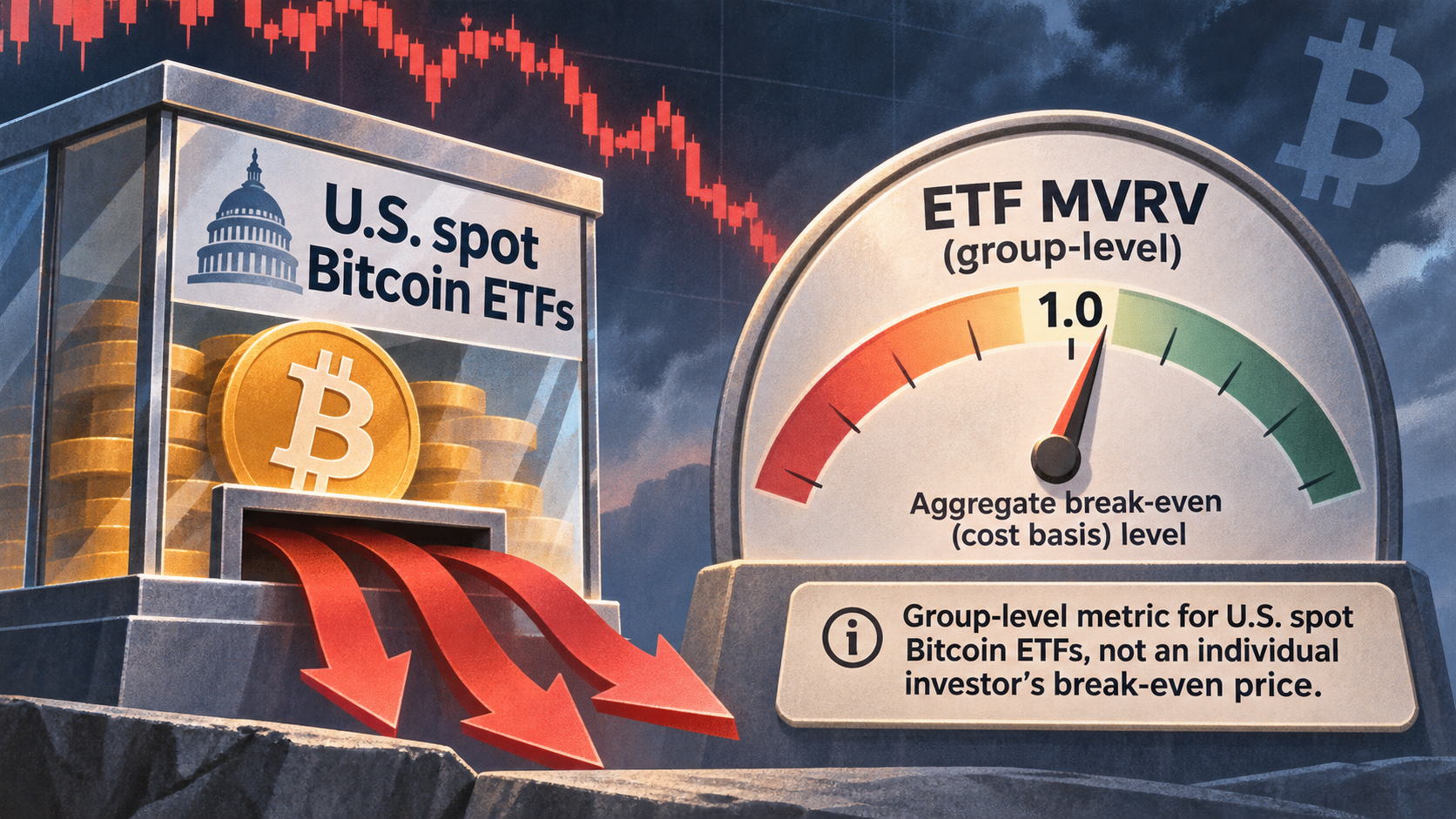
U.S. spot Bitcoin ETFs recorded net outflows on every trading day of the preceding week. Weekly net outflows totaled $995.4 million, slightly less than the week before, while weekly trading volume fell to $11.5 billion. Glassnode put the ETFs’ aggregate market-value-to-realized-value ratio, or MVRV, at 1.06—close to 1.0, the measure’s aggregate break-even level. That is a group-level estimate, not the cost basis of every ETF investor.
Recent holders carried more of the loss
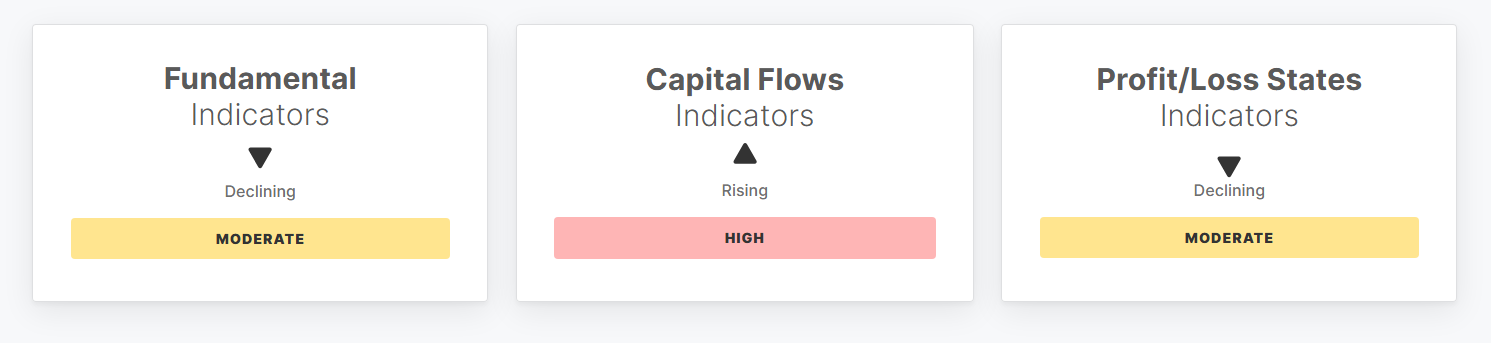
On-chain activity remained substantial during the selloff. Entity-adjusted daily transfer volume rose 3.6% to $5.4 billion, and daily active addresses stood at about 659,700. But monthly realized-cap growth slowed from 0.43% to 0.04%, which Glassnode read as a sharp slowdown in new capital entering Bitcoin.
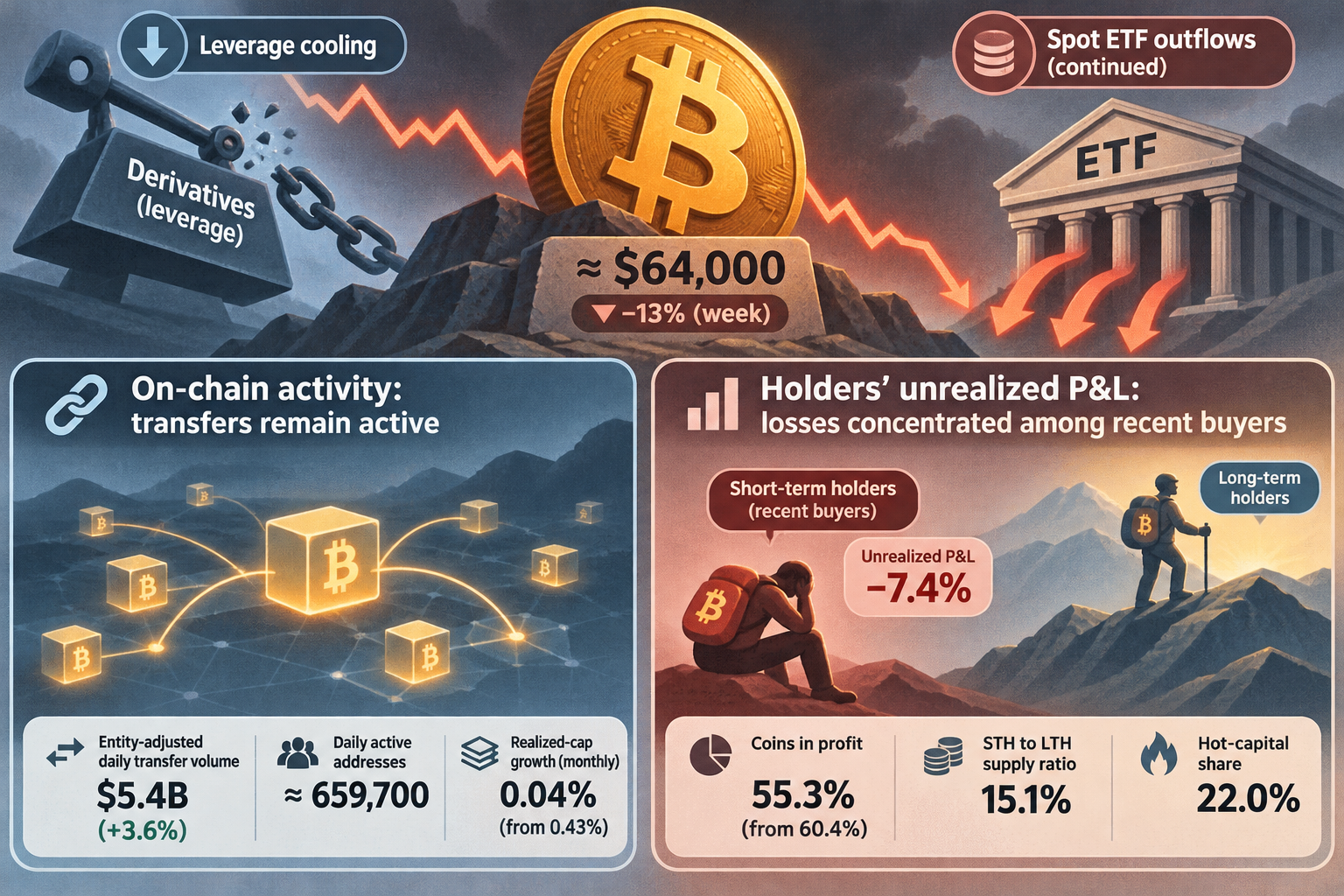
The short-term-to-long-term holder supply ratio edged up to 15.1%, while Glassnode’s hot-capital-share measure remained at 22.0%. The share of coins in profit fell from 60.4% to 55.3%. Short-term holders’ net unrealized profit/loss measure turned negative at −7.4%, and realized losses reached their highest level since July 2026. Glassnode said the loss pressure was concentrated among people who had bought in recent months.
Glassnode characterized the decline as a deleveraging episode involving ETF selling, speculative long-position exits and broader risk aversion. Its open question was whether ETF flows would reverse and whether selling by recent buyers would spread to longer-term holders. The lower derivatives exposure was observed; a durable price floor near $64,000 was not established by the report.